
Mycteria leucocephala (Painted Stork)
The Painted Stork: Bundala's Wading Jewel (Mycteria leucocephala)
The Painted Stork is one of the most visually spectacular waterbirds found in Sri Lanka, a large wading bird that transforms the shallow lagoons and brackish wetlands of the island's national parks into living canvases of colour during the northern winter. Listed as Near Threatened by the IUCN, the species is a resident breeder in Sri Lanka and also receives seasonal influxes of migratory birds from peninsular India. Bundala National Park — a Ramsar Wetland of International Importance — is the most celebrated site for observing large aggregations of Painted Storks, particularly between September and March.
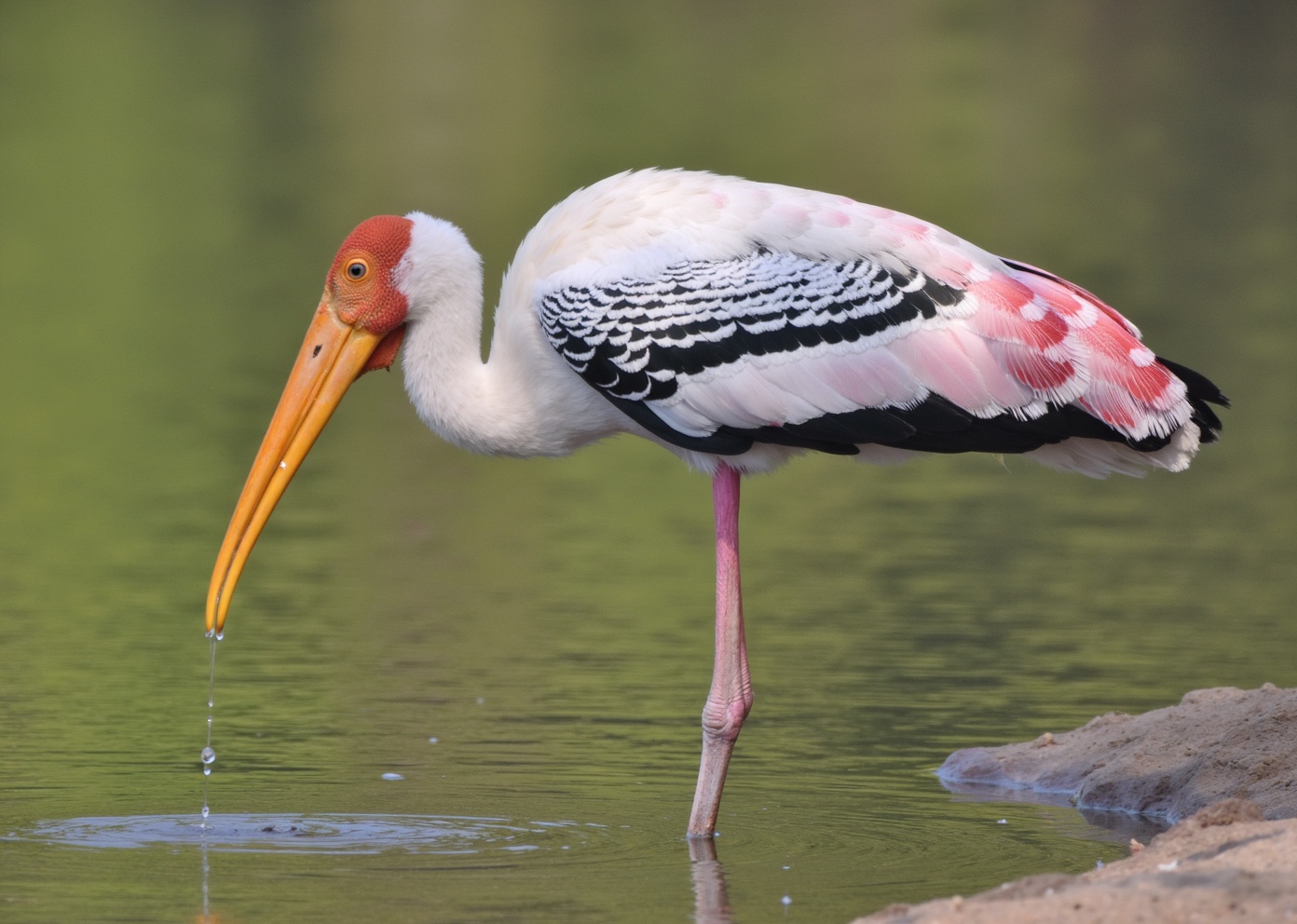
Standing approximately 93–102 cm tall with a wingspan that can exceed 150 cm, the Painted Stork is an unmistakable bird. Adults display largely white plumage with bold black wing bars and a vivid wash of deep rose-pink across the flight feathers — the "painted" colouration that gives the species its name. The bare facial skin is orange-yellow, and the long, thick, slightly downturned bill is similarly orange-yellow, perfectly suited for sweeping through the water. Immature birds are a duller brownish-grey and lack the pink wing colouration, acquiring adult plumage over two to three years.
The Painted Stork is a highly specialised tactile feeder, employing a hunting technique called grope-feeding or tactile foraging: it wades slowly through shallow water with its bill held open and slightly submerged, moving it from side to side. When a fish touches the bill tip, a reflex snap traps the prey — a strategy that allows feeding in murky water where sight-based hunting would fail. Fish of various sizes form the bulk of the diet, supplemented by frogs, crustaceans, and insects. Breeding colonies nest in trees over or near water, often in mixed-species heronries alongside painted storks nesting alongside Grey Herons, Little Egrets, and Night Herons.
Although the Painted Stork is not currently considered severely endangered, it faces increasing pressure from wetland drainage, pesticide pollution that reduces fish stocks, and disturbance of nesting colonies. In Sri Lanka, the spread of invasive water hyacinth (Eichhornia crassipes) clogs lagoons and reduces the shallow open-water foraging habitat the species depends upon. Bundala and other protected wetlands provide critical refugia. Continued protection of coastal lagoons, seasonal tanks, and river floodplains is essential to sustain Sri Lanka's breeding populations of this stunning bird.